Field Notes
What a Market Teaches About Listening
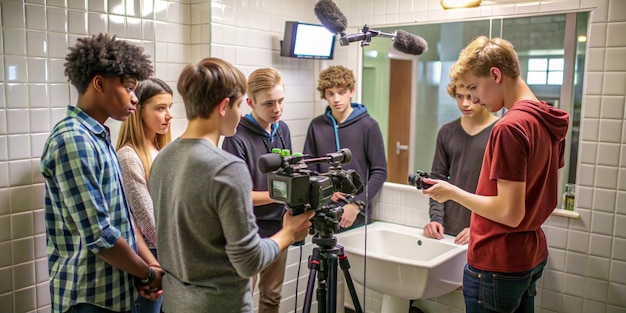
The first time we tried to record inside Oba Market, the tape came back nearly unusable. Not because of noise — noise was the whole point — but because everything sat at the same volume. Traders calling out prices, a generator two stalls down, someone's radio, all pressed flat into one wall of sound with nothing for a listener to hold on to.
It took three more visits before we understood the problem wasn't the environment. It was us. We had walked in trying to capture the market the way a photograph captures a scene, all at once, from a fixed distance. Sound doesn't work that way. A listener needs a path through it, something to follow, the way your ear naturally picks a single conversation out of a crowded room.
Finding a way in
What changed things was following one trader for an afternoon instead of trying to record the market as a whole. Her stall became the anchor. Everything else — the generator, the competing calls, the passing traffic — became texture around her voice rather than competing with it. The recording still had all the same elements, but now there was a reason to notice them.
We started thinking of it less like documentation and more like introduction. You wouldn't walk a visitor into a crowded room and leave them to figure out who's who. You'd guide them toward someone first, let that person orient them, and let the room reveal itself from there.
"The market doesn't need us to capture it. It needs someone to point toward a place worth standing."
What stayed in the edit
Editing this kind of material is its own discipline. It's tempting to clean up every stray sound, but stripping too much leaves a recording that feels staged rather than lived-in. We kept the generator. We kept the moments where our subject paused to haggle with a customer mid-sentence. Those interruptions are part of what the place actually sounds like, and cutting them out would have made the piece feel more polished but less true.
Our sound notes for this episode are longer than usual, because so much of the editing involved judgment calls about what to preserve. We think listeners deserve to know where those lines were drawn, which is part of why every episode ships with a transcript and a note on what was adjusted for clarity.
Have a story worth this kind of attention?
We're always glad to hear about places and people worth spending real time with.
Get in Touch